
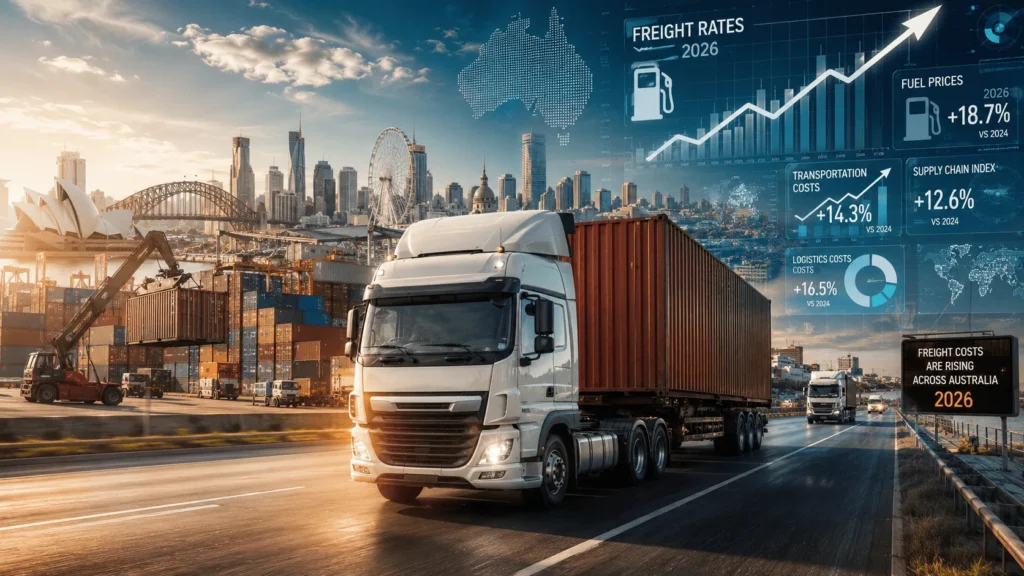
Freight transport is the backbone of Australia’s economy, underpinning industries such as retail, eCommerce, manufacturing, construction, agriculture and healthcare. Every day millions of dollars worth of goods are shipped across the country by road freight, rail freight, sea freight and air cargo services. But in recent years, businesses right across Australia have seen a huge jump in freight prices. Transport costs keep going up, whether you’re shipping products from Sydney to Melbourne or moving freight from Brisbane to the regions.
For many businesses, increased freight costs hit directly at profitability, pricing strategies, and customer satisfaction. Higher transportation costs frequently translate into higher product prices, slimmer profit margins and more difficult supply chain management. Understanding why freight rates are increasing is crucial for businesses that want to manage costs effectively and maintain efficient logistics operations. The good news is that companies that understand the reasons for these increases can make smarter decisions and lessen the impact on their operations.
Understanding Freight Rates
Freight rates refer to the charges logistics companies apply for transporting goods from one location to another. These rates are influenced by multiple factors including fuel prices, labor costs, vehicle maintenance, transportation demand, supply chain disruptions, and government regulations.
Businesses using freight transport Australia services typically pay for:
- transportation distance
- shipment weight
- cargo volume
- fuel costs
- toll charges
- warehousing services
- delivery speed
- special handling requirements
As operational expenses increase across the logistics industry, freight companies are often forced to adjust their pricing structures to remain profitable.
Why Freight Rates Are Increasing in Australia
Several factors are contributing to the rising cost of freight transport across Australia. While some challenges are global, others are specific to the Australian market.
1. Increasing Fuel Costs
Fuel is one of the biggest expenses in the transport and logistics industry. Every truck, delivery van, freight train and ship relies on fuel to move goods around Australia.
The volatility of fuel prices has increased in the last few years as:
- disturbances in the world oil market
- geopolitical tensions
- supply chain disruptions
- higher energy demand
Fuel costs are a major contributor to total transport costs for logistics companies operating between major cities such as Sydney and Brisbane.
Effects on Freight Rates
- Operating costs
- rose Fuel surcharges
- Higher delivery charges
- Profit margins decreased
When fuel costs rise, freight companies will often pass some of those costs on to customers in the form of increased freight rates.
2. Labor Shortages and Wage Increases
The logistics industry is facing ongoing labor shortages across Australia. Finding qualified truck drivers, warehouse workers, logistics coordinators, and supply chain professionals has become increasingly difficult.
Several factors contribute to workforce shortages:
- aging workforce
- growing demand for freight services
- skills shortages
- increased competition for workers
To attract and retain employees, logistics companies are offering:
- higher wages
- better benefits
- improved working conditions
- training programs
Impact on Freight Costs
- increased payroll expenses
- higher operational costs
- reduced workforce availability
- greater recruitment expenses
These increased labor costs contribute directly to rising freight transport prices.
3. Vehicle Maintenance and Equipment Cost
Freight vehicles need to be periodically maintained to be safe and reliable. Investment in trucks, trailers, warehouse equipment and logistics technology systems is continuous.
Typical maintenance costs are as follows:
- tire replacement
- engine servicing
- brake repairs
- safety inspections
- equipment upgrades
Additionally, modern logistics companies are investing a lot in:
- GPS tracking devices
- fleet management software services
- vehicle safety technology
- warehouse automation
Effect on Freight Rates
- higher operating expenses
- higher equipment expenses more investment in technology
Logistics companies will often change pricing to keep service quality and safety standards.
4. Increasing eCommerce Demand
Australia’s eCommerce sector continues to grow at a fast pace. Consumers increasingly expect to be able to:
- next day delivery
- same-day delivery
- real-time tracking
- flexible delivery options
This demand puts a lot of pressure on logistics providers to increase capacity and improve delivery performance.
Challenges Created by
- eCommerce Growth more deliveries
- higher last-mile delivery costs more
- complex route planning
- higher customer expectations
eCommerce is an opportunity for logistics companies, but it also increases the operational costs and thus freight rates.
5. Toll Costs and Infrastructure
Freight vehicles are travelling thousands of kilometres every week on Australia’s road network . The reasons for the increase in the costs of infrastructure are:
- road tolls
- highway maintenance costs
- urban congestion
- infrastructure upgrades
In busy cities such as Sydney, it is often expensive for companies to transport goods due to toll and congestion costs.
Impact on Logistics Operations
- extended delivery times
- increase fuel usage higher
- transport costs decreased
- fleet productivity
These factors affect freight costs throughout the supply chain.
6. Global Supply Chain Disruptions
Global supply chains remain vulnerable to various disruptions including:
- port congestion
- shipping delays
- natural disasters
- geopolitical conflicts
- manufacturing interruptions
When international supply chains experience disruptions, transportation costs often increase due to reduced capacity and higher demand.
Effects on Freight Rates
- shipping delays
- container shortages
- increased import costs
- higher transportation fees
Businesses relying on international trade are particularly affected by these challenges.
7. Increased Demand for Freight Services
Australia’s economy continues to generate strong demand for logistics and transport services. Industries such as:
- retail
- construction
- manufacturing
- agriculture
- healthcare
all require reliable freight transportation.
As demand increases, freight companies must:
- expand fleets
- hire more staff
- invest in technology
- increase operational capacity
Higher demand often leads to higher freight pricing, especially during peak seasons.
8. Technology Investments
Modern logistics companies are investing heavily in technology to improve efficiency and customer service.
Technology investments include:
- AI-powered logistics software
- real-time tracking systems
- warehouse automation
- route optimization tools
- fleet management platforms
While these technologies improve long-term efficiency, they require significant upfront investment.
Benefits of Technology
- improved delivery speed
- better shipment visibility
- enhanced customer experience
- reduced operational inefficiencies
These investments contribute to freight costs but also create better service quality.
9. Environmental Regulations and Sustainability
Sustainability is becoming an increasingly important topic in the logistics industry. Companies are investing on:
- electric vehicles
- low emissions transport options
- environmentally friendly packaging green warehousing
Additional investments are usually demanded by government regulations and environmental initiatives.
Impact on Freight
- Costs fleet
- updates compliance
- costs investments in sustainability
- environmental reporting obligations
These programs may incur greater costs upfront but can lead to savings on operations in the long run.
How Major Australian Cities Are Affected
Sydney
High demand for freight, traffic congestion and infrastructure costs mean Sydney is one of the most expensive logistics markets in Australia.
Melbourne
Melbourne is a major freight and warehousing hub facing rising transport demand and labour costs.
Brisbane
Brisbane continues to grow as a logistics centre and this creates further demand for freight services and investment in infrastructure.
How Businesses Can Manage Rising Freight Costs
Businesses can reduce the impact of rising freight rates by implementing smarter logistics strategies.
Effective Cost-Reduction Strategies
- optimize shipping routes
- consolidate shipments
- improve inventory planning
- use real-time tracking systems
- partner with reliable logistics providers
- adopt supply chain technology
- utilize multi-modal transport solutions
These strategies help businesses improve efficiency while controlling transportation expenses.
Frequently Asked Questions
Why are freight rates increasing in Australia?
Freight rates are increasing due to higher fuel costs, labor shortages, maintenance expenses, and growing demand for logistics services.
How do fuel prices affect freight costs?
Fuel is one of the largest transportation expenses, so rising fuel prices directly increase freight rates.
Does eCommerce impact freight pricing?
Yes, increasing eCommerce demand creates higher delivery volumes and last-mile delivery costs.
How can businesses reduce freight expenses?
Businesses can optimize routes, consolidate shipments, and improve supply chain efficiency.
Are freight costs expected to continue rising?
Freight costs may continue to fluctuate based on fuel prices, economic conditions, and transportation demand.
Which Australian cities have the highest freight activity?
Sydney, Melbourne, Brisbane, and Perth are among the busiest logistics hubs in Australia.
Final Conclusion
Freight rates in Australia are increasing due to a combination of rising fuel prices, labor shortages, infrastructure expenses, growing eCommerce demand, technology investments, and global supply chain challenges. While these increases create challenges for businesses, understanding the reasons behind them can help organizations develop smarter logistics strategies. By optimizing transportation operations, embracing technology, and working with reliable logistics partners, businesses can manage rising freight costs while maintaining efficient and reliable delivery services across Australia.