
The freight and logistics industry in Australia is evolving rapidly as businesses demand faster deliveries, better shipment visibility, and improved customer experiences. In today’s competitive market, customers no longer want to wait without updates about their shipments. They expect real-time information, live tracking notifications, accurate delivery estimates, and complete transparency throughout the transportation process. Because of this growing demand, real-time tracking technology has become one of the most important innovations in the modern logistics industry. Businesses operating in major Australian logistics hubs like Sydney, Melbourne, and Brisbane are now heavily investing in smart freight tracking systems to improve supply chain efficiency and customer satisfaction.
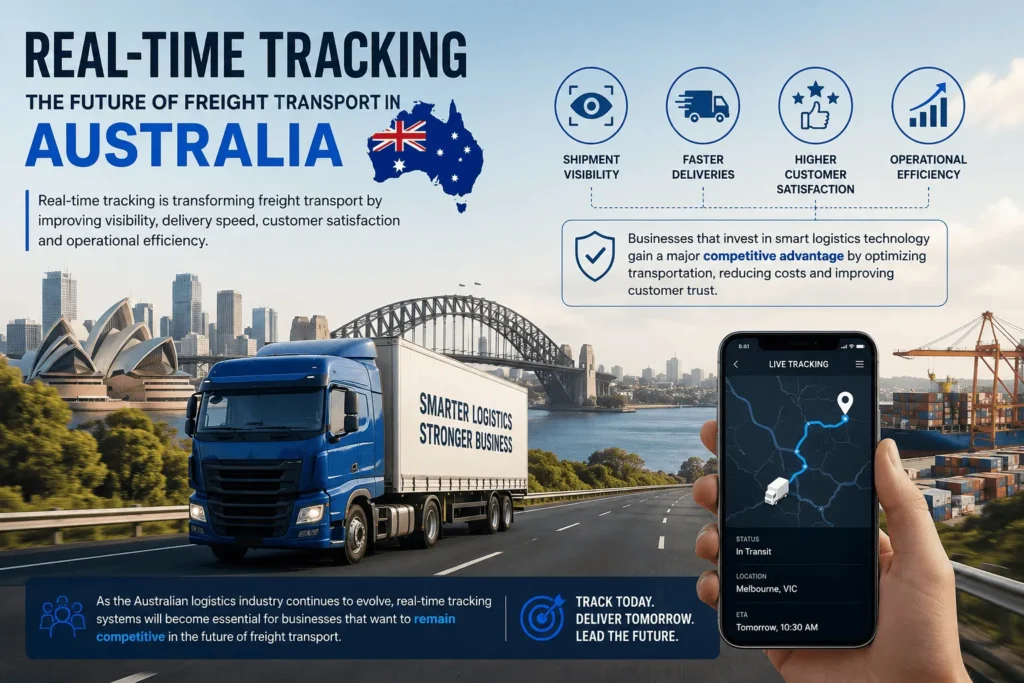
Real-time tracking is transforming the way freight transport operates across Australia. Earlier, logistics companies relied on manual communication methods, delayed shipment updates, and basic transport systems that created confusion and operational inefficiencies. Today, advanced GPS technology, AI-powered logistics software, IoT devices, and cloud-based tracking systems allow businesses to monitor freight movement in real time. These technologies provide complete shipment visibility from warehouse pickup to final delivery. Companies providing freight transport Australia services are using real-time tracking to reduce delays, improve route planning, lower operational costs, and build stronger customer trust.
What is Real-Time Tracking in Freight Transport?
Real-time tracking is a logistics technology that allows businesses, drivers, logistics managers, and customers to monitor shipment movement live during transportation. Modern tracking systems use:
- GPS technology
- cloud-based logistics software
- IoT sensors
- AI-powered route optimization
- mobile tracking applications
These systems continuously collect and share shipment data, helping logistics companies improve delivery accuracy and operational efficiency. Businesses using logistics services Australia can now instantly track:
- truck locations
- shipment progress
- estimated arrival times
- traffic conditions
- fuel consumption
- delivery delays
This level of visibility has completely transformed supply chain management in Australia.
Why Real-Time Tracking is Becoming Essential in Australia
The Australian logistics industry covers massive distances between cities and regions, making transportation management more complex than many other countries. Freight moving between Perth and Sydney, for example, travels thousands of kilometers. Without real-time tracking systems, businesses struggle to monitor delays, optimize routes, or communicate accurate delivery information to customers.
At the same time, eCommerce growth in Australia has significantly increased customer expectations. Modern consumers want:
- same-day delivery updates
- live shipment tracking
- accurate delivery notifications
- transparent logistics communication
Businesses that fail to provide shipment visibility often lose customer trust and face higher complaint rates.
Benefits of Real-Time Tracking for Freight Transport
Real-time tracking provides major operational and financial benefits for logistics companies across Australia. Businesses that invest in smart freight tracking systems gain a competitive advantage because they can deliver faster, reduce delays, and improve customer satisfaction.
Major Benefits Include:
- improved delivery accuracy
- faster customer communication
- reduced transportation delays
- lower fuel costs
- better route optimization
- improved fleet management
- increased operational transparency
- stronger customer trust
- reduced shipment theft risk
- faster issue resolution
These advantages help logistics companies improve efficiency while reducing operational expenses.
- Improved Delivery Speed & Efficiency
One of the biggest ways real-time tracking changes freight transport is by improving delivery speed. Logistics companies can now monitor traffic conditions, weather disruptions, and road closures instantly. This allows dispatch teams to reroute drivers and avoid unnecessary delays.
Businesses operating in Melbourne use smart route optimization systems to reduce delivery times and improve fuel efficiency. Real-time tracking software identifies:
- faster delivery routes
- low-traffic roads
- delivery bottlenecks
- route disruptions
This improves transportation efficiency and helps businesses meet customer delivery expectations.
Benefits of Faster Delivery Management:
- reduced delivery delays
- improved customer satisfaction
- increased driver productivity
- lower operational costs
- AI & Smart Logistics Integration
Artificial Intelligence is now playing a major role in real-time freight tracking systems. AI-powered logistics platforms analyze live shipment data and automatically suggest operational improvements.
AI systems help businesses:
- predict delivery delays
- optimize routes automatically
- monitor driver performance
- reduce fuel consumption
- improve delivery scheduling
Many smart logistics providers in Brisbane are integrating AI-based tracking systems into their supply chain operations to improve freight efficiency.
Benefits of AI Tracking Systems:
- reduced manual workload
- smarter delivery planning
- lower transportation costs
- improved logistics accuracy
- Reduced Fuel Costs Through Route Optimization
Fuel costs are one of the largest expenses in the transport industry. Real-time tracking systems help logistics companies reduce fuel consumption by improving route planning and reducing idle driving time.
Smart tracking systems can:
- avoid traffic congestion
- reduce unnecessary mileage
- monitor driver behavior
- improve delivery scheduling
Businesses providing transport services Australia are increasingly investing in fuel optimization technology to remain profitable in a highly competitive market.
Benefits of Fuel Optimization:
- lower transportation expenses
- reduced emissions
- improved fleet efficiency
- higher profitability
- Better Customer Experience
Modern customers expect complete shipment transparency. Real-time tracking allows businesses to provide:
- live delivery updates
- shipment notifications
- accurate arrival estimates
- instant communication
Customers no longer need to contact support teams repeatedly to ask about delivery status. This improves customer satisfaction and reduces support costs.
Businesses operating in Sydney are heavily investing in customer-focused logistics technology because delivery transparency has become a major competitive advantage.
Benefits for Customers:
- improved trust
- fewer delivery frustrations
- better communication
- more delivery accuracy
- Improved Fleet Management
Real-time tracking systems also help logistics companies manage their fleets more effectively. Fleet managers can monitor:
- vehicle locations
- driver performance
- maintenance schedules
- fuel usage
- delivery progress
This helps businesses reduce operational inefficiencies and improve transportation planning.
Benefits of Smart Fleet Management:
- reduced maintenance costs
- improved driver productivity
- fewer delivery disruptions
- better resource management
- Increased Freight Security
Freight theft and shipment loss are major concerns in the logistics industry. Real-time tracking significantly improves shipment security because businesses can monitor cargo movement continuously.
Tracking systems can:
- detect route deviations
- identify unauthorized stops
- provide theft alerts
- improve shipment accountability
This is especially important for high-value freight transport across long Australian routes.
- Better Supply Chain Visibility
Supply chain visibility is one of the biggest advantages of real-time tracking systems. Businesses can monitor shipments at every stage of transportation.
This visibility helps companies:
- improve inventory planning
- reduce supply chain disruptions
- manage warehouse operations efficiently
- improve customer communication
Businesses using supply chain Australia solutions are increasingly adopting cloud-based tracking systems to improve operational transparency.
- Mobile Tracking & Customer Notifications
Modern logistics tracking systems now provide mobile applications that allow customers and logistics managers to monitor shipments directly from smartphones.
Features include:
- live truck tracking
- automated notifications
- delivery alerts
- digital proof of delivery
This improves convenience and customer engagement.
Real-Time Tracking for Different Transport Modes
Road Freight
Most commonly used for:
- local deliveries
- last-mile transport
- eCommerce shipping
Rail Freight
Used for:
- bulk transportation
- long-distance domestic shipping
Sea Freight
Best for:
- international shipping
- container transport
Real-time tracking improves visibility across all freight transportation methods.
Frequently Asked Questions
Q1. What is real-time freight tracking?
It is a system that allows businesses and customers to monitor shipment movement live during transportation.
Q2. How does real-time tracking reduce logistics costs?
It improves route optimization, reduces fuel usage, and minimizes delivery delays.
Q3. Why is shipment visibility important?
It improves customer trust and helps businesses manage operations more efficiently.
Q4. Does real-time tracking improve delivery speed?
Yes, it helps companies identify faster and more efficient delivery routes.
Q5. Which Australian cities use advanced logistics tracking systems?
Sydney, Melbourne, Brisbane, and Perth are major logistics technology hubs.