
Artificial Intelligence (AI) refers to systems that can mimic human intelligence, while Machine Learning (ML) is a subset of AI that enables systems to learn from data and improve performance over time without explicit programming.
In supply chain management, AI and ML analyze massive datasets to:
- Identify patterns
- Predict outcomes
- Automate decisions
- Optimize operations in real time
These technologies convert supply chains from reactive systems into predictive and proactive networks.
Primary keywords naturally included:
AI in supply chain Australia, machine learning in logistics, intelligent supply chain, smart logistics Australia
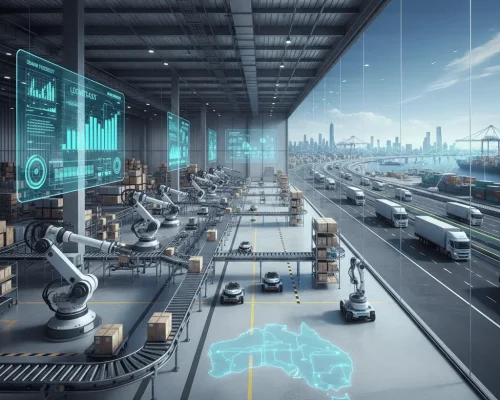
Why AI and Machine Learning Are Critical for Australian Supply Chains
Australia’s supply chain landscape is uniquely challenging due to:
- Vast geographic distances
- Heavy reliance on road, sea, and air freight
- High fuel and labor costs
- Weather disruptions and natural disasters
- Growing e-commerce demand
AI and ML help Australian businesses manage these challenges by delivering speed, accuracy, and visibility across the supply chain.
Key Areas Where AI and Machine Learning Optimize Supply Chains
1. Demand Forecasting and Planning
One of the biggest advantages of AI is accurate demand forecasting.
Machine learning models analyze:
- Historical sales data
- Seasonal trends
- Market behavior
- External factors like weather or promotions
This allows businesses to:
- Predict demand accurately
- Avoid overstocking and stockouts
- Plan inventory more efficiently
For Australian retailers and distributors, AI-driven forecasting is essential for managing seasonal demand spikes across different states.
2. Inventory Optimization
AI-powered inventory management systems ensure the right stock is available at the right location at the right time.
Benefits include:
- Reduced holding costs
- Lower warehousing expenses
- Faster order fulfillment
- Improved cash flow
Machine learning continuously adjusts stock levels based on real-time sales and supply patterns, which is critical for multi-warehouse operations in Australia.
3. Smart Warehousing and Automation
AI and ML play a major role in automated warehouses:
- Intelligent picking and packing systems
- Automated storage and retrieval systems (AS/RS)
- Robotics guided by machine learning algorithms
- Optimized warehouse layouts
These systems improve:
- Picking accuracy
- Order processing speed
- Space utilization
- Worker safety
Australian warehouses using AI-driven automation are achieving faster turnaround times with lower operational costs.
4. Transportation and Route Optimization
Transportation accounts for a large portion of logistics costs in Australia. AI helps optimize:
- Delivery routes
- Fleet utilization
- Fuel consumption
- Driver schedules
Machine learning systems analyze:
- Traffic patterns
- Weather conditions
- Delivery time windows
- Fuel prices
This results in shorter routes, faster deliveries, and lower transport costs, especially for long interstate routes.
5. Freight Forecasting and Capacity Planning
AI helps freight forwarders and logistics companies predict:
- Shipment volumes
- Container availability
- Carrier capacity
- Peak demand periods
This allows proactive planning instead of last-minute adjustments, improving reliability and reducing delays in Australian import-export operations.
6. Risk Management and Supply Chain Resilience
AI systems identify potential disruptions by analyzing:
- Supplier performance
- Port congestion data
- Weather patterns
- Global trade signals
Machine learning models can recommend alternative routes, suppliers, or transport modes, helping Australian supply chains remain resilient during disruptions such as floods, bushfires, or global shipping delays.
7. Supplier Performance and Procurement Optimization
AI evaluates supplier data to measure:
- Delivery reliability
- Cost efficiency
- Quality consistency
This helps businesses:
- Choose better suppliers
- Negotiate smarter contracts
- Reduce procurement risks
For Australian companies sourcing both domestically and internationally, AI-driven procurement decisions improve long-term supply chain stability.
Benefits of AI and Machine Learning in Australian Supply Chains
- Improved Efficiency
Automated decision-making reduces manual processes and speeds up operations.
- Lower Operational Costs
Optimized inventory, transport routes, and labor utilization reduce overall logistics expenses.
- Enhanced Visibility
Real-time insights into inventory, shipments, and demand improve transparency across the supply chain.
- Better Customer Experience
Faster deliveries, fewer errors, and reliable service increase customer satisfaction.
- Scalability
AI-powered systems allow businesses to scale operations without proportional increases in cost or manpower.
Real-World Adoption in Australia
Many Australian organizations are already leveraging AI and ML:
- Large retailers use AI for demand forecasting and automated fulfillment
- Logistics providers use ML for route optimization and fleet management
- Warehousing companies deploy AI-driven robotics for faster order processing
- Freight forwarders use predictive analytics for shipment planning
These early adopters are gaining a strong competitive advantage.
Challenges of Implementing AI and ML in Supply Chains
Despite the benefits, adoption comes with challenges:
- High initial investment
- Data quality and integration issues
- Need for skilled workforce
- Change management and training
- Cybersecurity concerns
However, as technology matures, costs are decreasing and implementation is becoming more accessible for mid-sized businesses in Australia.
The Future of AI-Driven Supply Chains in Australia
The future supply chain will be:
- Predictive rather than reactive
- Automated rather than manual
- Data-driven rather than intuition-based
Upcoming trends include:
- Fully autonomous warehouses
- AI-powered end-to-end supply chain visibility
- Self-optimizing transport networks
- Sustainable, low-emission logistics driven by AI analytics
AI and machine learning will become core components of supply chain strategy, not optional tools.
Conclusion
AI and machine learning are fundamentally transforming supply chain management in Australia. By enabling smarter forecasting, optimized inventory, efficient transportation, and proactive risk management, these technologies are helping businesses operate faster, leaner, and more reliably.
Australian companies that embrace AI-driven supply chains today will be better positioned to handle future challenges, scale efficiently, and deliver exceptional value to customers in an increasingly competitive logistics environment.
Frequently Asked Questions
Q1: How is AI used in supply chain management?
AI is used for demand forecasting, inventory optimization, route planning, automation, and risk management.
Q2: Why is AI important for Australian supply chains?
It helps manage long distances, high costs, demand fluctuations, and supply chain disruptions.
Q3: What is machine learning in logistics?
Machine learning analyzes data patterns to improve predictions and automate logistics decisions.
Q4: Can small businesses use AI in supply chains?
Yes, many cloud-based AI tools are now affordable and scalable for small and medium businesses.
Q5: Will AI replace human jobs in logistics?
AI reduces repetitive tasks but creates new roles focused on analysis, strategy, and system management.