
The supply chain ecosystem in Australia is changing quickly, making strategic warehouse placement more important than ever. Businesses must carefully consider where to locate their warehouses and distribution centers due to Australia’s large geographic area, expanding population, growing e-commerce demand, and intricate import-export channels.
Not only does a well-located warehouse store goods, but it also boosts overall supply chain resilience, lowers expenses, optimizes inventory flow, and greatly increases logistics efficiency. The ideal warehouse location can revolutionize operations and provide a significant competitive advantage for distribution companies, wholesalers, e-commerce brands, and freight forwarding companies throughout Australia.
This thorough guide explains the importance of strategic warehouse placement, what makes a position successful, and how Australia’s top logistics hubs assist companies in growing more quickly, increasing delivery speed, and lowering operating costs.
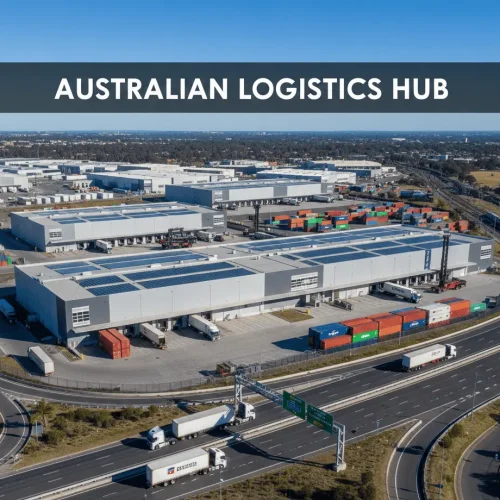
1. Why Warehouse Location Matters in Australia
Australia is geographically unique:
- Large landmass
- Long distances between cities
- Ports on opposite coasts
- Remote regional communities
- High freight transportation costs
Because of these challenges, the location of a warehouse can significantly impact:
- Transportation time and cost
- Route planning and freight optimisation
- Customer delivery speeds
- Import and export efficiency
- Last-mile distribution capability
- Inventory turnover rates
In short:
A well-located warehouse = faster, cheaper, and more reliable logistics.
2. Australia’s Geography Makes Strategic Placement Essential
Unlike smaller countries where distribution can be managed from one or two central hubs, Australia requires carefully selected, multi-regional warehouse networks.
Key challenges include:
- Long interstate travel routes
- Limited rail infrastructure in some states
- Rural and regional transport complexity
- Varying port distances
- Different state-level regulations
This makes proximity to highways, ports, airports, and customer clusters a major priority when choosing a warehouse location.
3. The Impact of Strategic Location on Transportation Costs
Transportation costs account for nearly 50% of total logistics expenses in Australia.
A strategically located warehouse can reduce:
- Fuel costs
- Transit time
- Driver hours
- Mileage
- Cross-state freight expenses
For example:
A warehouse near Western Sydney’s logistics corridor can easily access:
- M4 & M7 motorways
- Port Botany
- Sydney Airport
- Large metro population
This results in shorter routes, lower handling costs, and faster delivery times.
4. Faster Last-Mile Delivery for E-Commerce
Australia’s e-commerce sector is growing rapidly. Customers expect:
- Same-day delivery
- Next-day options
- Faster returns
- Real-time tracking
The closer a warehouse is to the customer base, the faster the delivery.
This is why e-commerce giants use multi-warehouse fulfilment models in:
- Sydney (NSW)
- Melbourne (VIC)
- Brisbane (QLD)
- Perth (WA)
Strategic location = higher customer satisfaction and lower return rates.
5. Better Freight Forwarding & Port Connectivity
For importers and exporters, proximity to ports is a major advantage.
Top Australian freight ports:
- Port Botany (Sydney)
- Port of Melbourne
- Port of Brisbane
- Fremantle Port (Perth)
A warehouse near a port helps:
- Reduce container transport cost
- Speed up customs clearance
- Improve cross-docking processes
- Lower demurrage and detention charges
Companies that combine warehousing with freight forwarding can streamline their entire supply chain.
6. Labor Availability and Operational Efficiency
Warehouse operations require skilled staff for:
- Forklift operation
- Picking & packing
- Inventory management
- Dispatch coordination
- Quality control
Warehouses located near major urban centres have easier access to trained workforce.
This reduces training time, labour shortages, and recruitment costs.
7. Cost Differences Between Australian Cities
Warehouse rental and operational costs vary significantly across states:
City | Cost Profile | Notes |
Sydney | High | Strong demand, best connectivity |
Melbourne West (Truganina) | Moderate | Industry-leading logistics hub |
Brisbane | Medium | Growing trade coast region |
Adelaide | Low | Cheaper land, good interstate routes |
Perth | Medium | Supports WA mining & regional supply |
The best location balances affordability + connectivity + workforce.
8. Australia’s Top Logistics & Warehousing Locations
1. Western Sydney (NSW)
- M4, M5, M7 motorways
- Access to Port Botany
- Close to Sydney Airport
- Largest population coverage
2. Truganina & Derrimut (Melbourne West)
- Australia’s fastest-growing logistics zone
- Easy access to Port of Melbourne
- Cheaper industrial land
3. Brisbane Trade Coast
- Near Port of Brisbane
- Close to Brisbane Airport
- Great for international freight
4. Perth Eastern Suburbs
- Supports WA supply chains
- Proximity to major highways
5. Adelaide North
- Cost-effective
- Road connections to Sydney, Melbourne, Perth
These regions form the backbone of Australia’s logistics network.
9. How Technology Helps Choose Strategic Warehouse Locations
Modern supply chain management uses advanced tools to optimise warehouse placement:
✔ Data analytics
Predicts:
- Customer demand
- Order density
- Traffic patterns
- Delivery frequency
✔ AI route optimization
Reduces:
- Mileage
- Time-to-deliver
- Fleet wastage
✔ Geographic Information Systems (GIS)
Helps identify:
- Best transport corridors
- Low-cost zones
- High-demand regions
✔ Warehouse Management Systems (WMS)
Ensures:
- Real-time visibility
- Faster turnover
- Efficient storage
Technology helps businesses design smarter, scalable multi-warehouse networks.
10. Benefits of Choosing the Right Warehouse Location
✔ Lower transportation costs
✔ Faster delivery times
✔ Stronger market reach
✔ Improved customer satisfaction
✔ Better inventory turnover
✔ Optimal labour utilisation
✔ Reduced freight forwarding delays
✔ Enhanced national distribution capability
In Australia’s competitive logistics environment, these advantages directly translate into higher profitability.
Conclusion
A strategic warehouse location is one of the most important factors in creating a high-performing, cost-efficient supply chain in Australia. From freight forwarding and e-commerce fulfilment to nationwide distribution, a well-chosen location enhances speed, lowers costs, improves resource allocation, and ensures long-term business scalability.
Companies that invest in smart, data-driven warehouse placement gain a massive edge over competitors and deliver superior customer experiences.
Frequently Asks Questions (FAQs )
Q1: Why is strategic warehouse location important in Australia?
Because it reduces delivery time, transportation cost, and improves logistics efficiency across large distances.
Q2: What is the best warehouse location for Australian distribution?
Western Sydney, Melbourne West (Truganina), Brisbane Trade Coast, and Adelaide North.
Q3: How does warehouse location affect logistics cost?
A well-placed warehouse shortens routes, reduces fuel usage, and minimizes handling time.
Q4: What factors should businesses consider?
Costs, transport connectivity, customer proximity, workforce availability, and port access.
Q5: Why do e-commerce companies use multiple warehouses?
To offer fast nationwide delivery and reduce shipping costs.