
In today’s competitive Australian market, businesses can no longer rely on traditional storage systems to manage inventory and logistics. Whether you operate in manufacturing, retail, e-commerce, or import-export, your supply chain efficiency directly impacts profitability, customer satisfaction, and long-term growth.
Smart warehousing has become a critical component of modern logistics solutions in Australia. By combining warehouse automation, advanced warehouse management systems (WMS), real-time inventory tracking, and integrated freight coordination, businesses can transform their entire supply chain operations.
This article explains how smart warehousing improves supply chain efficiency in Australia and why companies are increasingly investing in intelligent warehouse solutions.
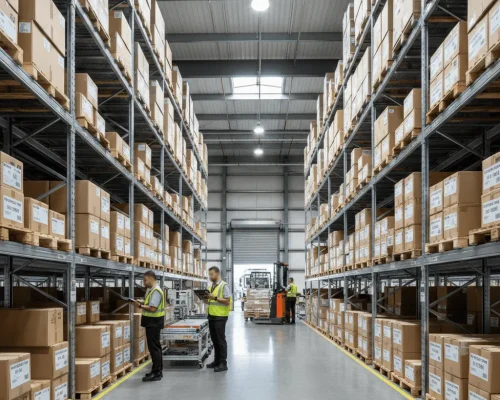
What Is Smart Warehousing?
Smart warehousing refers to the use of advanced technology and data-driven systems to manage storage, inventory, and distribution processes efficiently. Unlike traditional warehouses that rely heavily on manual systems, smart warehouses use:
- Warehouse Management Systems (WMS)
- Barcode and RFID tracking
- Real-time inventory management
- Automated picking and packing systems
- Cloud-based logistics software
- Integrated transport coordination
These tools create a connected supply chain environment where warehouse operations are seamlessly aligned with freight, transport, and distribution services across Australia.
Why Smart Warehousing Matters for Supply Chain Efficiency in Australia
Australia’s vast geography makes logistics planning complex. Interstate freight between Sydney, Melbourne, Brisbane, Perth, and regional areas requires precision coordination.
If warehouse operations are inefficient, businesses face:
- Delivery delays
- Stock shortages
- Excess inventory costs
- Higher transport expenses
- Poor customer experience
Smart warehousing eliminates these inefficiencies and strengthens overall supply chain management.
1. Real-Time Inventory Visibility Improves Accuracy
One of the biggest causes of supply chain disruption is inaccurate inventory data.
With a smart warehouse management system (WMS), businesses gain:
- Live inventory tracking
- Automated stock updates
- Low-stock alerts
- Demand-based replenishment
Real-time inventory management in Australia ensures businesses avoid stockouts and overstocking. Accurate data reduces working capital blockage and improves inventory turnover rates.
This directly enhances supply chain efficiency by enabling faster and smarter decision-making.
2. Faster Order Fulfilment and Distribution
In today’s e-commerce-driven economy, speed matters.
Smart warehousing improves order processing through:
- Digital picking systems
- Automated sorting technology
- Optimized pick-and-pack workflows
- System-driven dispatch scheduling
These improvements reduce fulfilment time and improve distribution services across Australia.
For businesses offering freight and warehousing services, faster processing means better coordination with transport fleets and improved delivery performance.
3. Better Integration with Transport and Freight Services
Smart warehousing does not operate in isolation. It integrates directly with freight and logistics operations.
When warehouse systems are connected to transport management platforms:
- Loading schedules are optimized
- Truck idle time is reduced
- Route planning becomes efficient
- Fuel costs are minimized
An integrated transport and logistics company in Australia benefits significantly from connected warehouse operations. The result is smoother interstate freight movement and reliable distribution services.
4. Reduced Human Errors Through Warehouse Automation
Manual systems increase the risk of:
- Picking errors
- Dispatch mistakes
- Duplicate shipments
- Documentation inaccuracies
Warehouse automation reduces these issues using barcode scanners, RFID systems, and digital inventory logs.
By minimizing human errors, businesses improve reliability and reduce costly returns or shipment corrections. This strengthens end-to-end supply chain management.
5. Improved Warehouse Space Utilization
Warehouse space is a major operational cost. Smart warehousing uses data analytics to optimize storage capacity.
Key strategies include:
- Vertical storage planning
- Intelligent slotting systems
- High-demand product positioning
- Dynamic space allocation
Efficient space utilization reduces the need for additional storage facilities and lowers overall warehousing costs. This makes supply chain operations more cost-effective and scalable.
6. Data-Driven Demand Forecasting
Modern smart warehouses collect valuable operational data. This data supports:
- Sales trend analysis
- Seasonal demand forecasting
- Inventory turnover monitoring
- Procurement planning
Better forecasting reduces emergency freight expenses and improves production scheduling.
In Australia’s competitive market, data-driven supply chain planning creates a strong operational advantage.
7. Scalability with 3PL Warehousing Services
Many businesses in Australia now rely on 3PL warehousing services to scale operations without investing in large infrastructure.
Smart third-party logistics providers offer:
- Flexible storage solutions
- Nationwide distribution services
- Integrated freight coordination
- Advanced WMS platforms
Outsourcing to a professional logistics partner improves operational efficiency while allowing businesses to focus on growth and customer acquisition.
8. Enhanced Supply Chain Transparency
Transparency is critical in modern supply chain management.
Smart warehousing enables:
- Real-time shipment tracking
- Automated dispatch confirmations
- Inventory performance reports
- Delivery status visibility
This transparency builds trust with suppliers, retailers, and end customers.
9. Lower Operational Costs
Smart warehousing reduces costs in several ways:
- Less manual labour dependency
- Reduced inventory holding costs
- Fewer shipping errors
- Lower transport idle time
- Improved fuel efficiency
These savings collectively improve profit margins and operational sustainability
10. Competitive Advantage in the Australian Market.
Businesses that invest in smart warehousing in Australia gain:
- Faster delivery performance
- Stronger customer satisfaction
- Better cost control
- Reliable supply chain resilience
As e-commerce, retail, and manufacturing sectors continue to grow, efficient warehouse and distribution systems become essential for long-term success.
Industries That Benefit Most from Smart Warehousing
Smart warehousing supports multiple industries, including:
- E-commerce businesses
- Retail chains
- Manufacturing companies
- FMCG distribution
- Pharmaceutical logistics
- Import-export operations
Each of these sectors depends heavily on efficient logistics solutions in Australia.
The Future of Smart Warehousing in Australia
The future of warehousing includes:
- AI-driven inventory optimization
- Robotics in picking and packing
- Automated guided vehicles (AGVs)
- Cloud-integrated supply chain platforms
- Sustainable warehouse operations
As technology advances, smart warehousing will continue to redefine supply chain efficiency across Australia.
Conclusion
Smart warehousing is no longer optional for businesses aiming to compete in the Australian logistics landscape. It is a strategic investment that enhances supply chain efficiency, reduces operational costs, and improves customer satisfaction.
By implementing warehouse management systems, automation, real-time inventory tracking, and integrated freight coordination, businesses can create a seamless supply chain that supports long-term growth.
For companies seeking reliable logistics solutions in Australia, adopting smart warehousing practices is a powerful step toward operational excellence and competitive advantage.
Frequently Asked Questions
Q1. What is smart warehousing?
Smart warehousing uses technology like WMS, automation, and real-time tracking to improve storage and logistics efficiency.
Q2. How does smart warehousing improve supply chain efficiency?
It reduces errors, speeds up order processing, and enhances inventory visibility.
Q3. What is a Warehouse Management System (WMS)?
A WMS is software that manages inventory, storage, picking, and dispatch operations.
Q4. Is smart warehousing suitable for small businesses?
Yes, especially through 3PL warehousing services that offer scalable solutions.
Q5. Why is smart warehousing important in Australia?
Australia’s large geography requires efficient, technology-driven logistics coordination.