
Introduction
Data analytics is now the foundation of the logistics and freight forwarding sector in the fast-paced global trade environment of today. Companies all over Australia are moving away from manual reporting and suppositions. Rather, they make quicker, more intelligent, and more lucrative logistics decisions by using real-time data insights.
Data analytics in logistics is revolutionizing the movement of goods throughout Australia and beyond, from supply chain visibility and inventory management to demand forecasting and route optimization.
This article examines the main advantages, resources, and practical applications of data analytics that are propelling the revolution in freight forwarding in Australia.
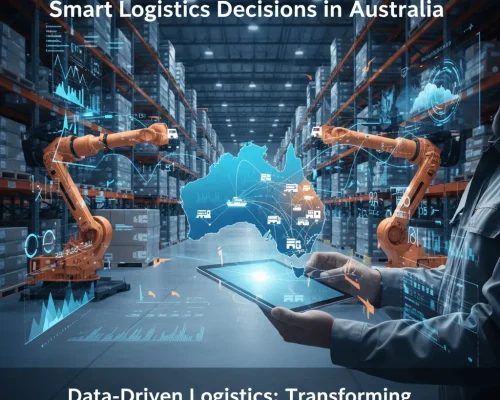
What Does Logistics Data Analytics Mean?
The process of gathering, evaluating, and interpreting data from different supply chain phases, including transportation, warehousing, inventory, orders, and customer behavior, in order to make better business decisions, is known as data analytics in logistics.
This entails the following for freight forwarders in Australia:
- Monitoring shipment performance
- Predicting delivery times
- Reducing fuel costs
- Optimizing routes
- Managing risks
- Enhancing customer satisfaction
Why Data Analytics Matters for Australian Logistics
Australia’s logistics network covers vast distances — from the ports of Sydney and Melbourne to the mines in Western Australia. This makes data-driven logistics essential for:
✅ Reducing costs across long-distance transportation
✅ Improving efficiency with predictive maintenance
✅ Enhancing delivery accuracy
✅ Identifying trends in cargo demand
✅ Optimizing resource allocation
In short, data analytics helps Australian logistics companies stay competitive in a global market.
Types of Data Analytics Used in Freight Forwarding
There are four major types of analytics transforming the freight forwarding industry in Australia:
Type | Purpose | Example |
Descriptive Analytics | Understand past performance | Delivery delays, cost reports |
Diagnostic Analytics | Identify causes of problems | Why a route is slower |
Predictive Analytics | Forecast future trends | Shipping demand next month |
Prescriptive Analytics | Suggest best actions | Shortest route or best carrier |
1. Route Optimization Using Real-Time Data
In a country as vast as Australia, route planning is crucial. Data analytics combines GPS data, traffic feeds, and weather conditions to optimize routes for trucks and shipments.
Benefits:
- Reduced travel time
- Lower fuel consumption
- Real-time rerouting during road closures or weather issues
This helps freight forwarders in Australia improve on-time delivery and reduce operational costs.
2. Predictive Maintenance for Fleet Management
Downtime is one of the biggest cost drivers in logistics. Using predictive analytics, companies can monitor truck performance, tire wear, and fuel efficiency to predict maintenance needs before breakdowns occur.
Result:
✔ Fewer unexpected breakdowns
✔ Reduced repair costs
✔ Longer fleet lifespan
3. Inventory and Warehouse Management
In freight forwarding, delays often occur because of poor warehouse coordination. Data analytics tools integrate warehouse data with shipment schedules, helping businesses:
- Maintain accurate stock levels
- Track incoming/outgoing shipments
- Reduce holding costs
- Automate reordering processes
Smart warehouses in Sydney, Brisbane, and Perth are already using IoT sensors and RFID technology combined with analytics for better visibility.
4. Supply Chain Visibility & Transparency
Customers now demand end-to-end shipment visibility. Using analytics, logistics companies can track shipments in real time and identify bottlenecks in the supply chain.
Example:
If a shipment from Melbourne to Singapore is delayed at customs, the system immediately updates stakeholders.
This transparency builds trust and enhances the customer experience.
5. Cost Optimization Through Data Insights
Every stage of the logistics process — from booking to delivery — produces valuable data. When analyzed properly, it helps identify:
- Inefficient carriers
- Wasted routes
- Delayed customs clearance
- Hidden operational costs
With proper analysis, freight forwarders in Australia can save up to 15–25% on logistics expenses annually.
6. Data-Driven Decision Making in Freight Forwarding
Traditional freight forwarding relied heavily on experience. Today, logistics leaders make data-backed decisions supported by real-time dashboards.
For example:
- AI tools predict the best shipping mode (air, sea, or road) based on cost and urgency.
- Data models analyze which suppliers or carriers offer better performance.
This ensures efficiency and accuracy at every stage.
7. Use of IoT and Telematics
IoT sensors on vehicles and containers collect real-time data about:
- Temperature
- Location
- Cargo condition
- Vehicle speed
Combined with analytics, this helps logistics companies ensure:
✔ Safe transport of perishable goods
✔ Reduced cargo damage
✔ Improved compliance with Australian freight regulations
8. Artificial Intelligence (AI) and Machine Learning in Logistics
AI and machine learning algorithms can identify patterns in historical data to predict future shipping trends.
For example:
- Seasonal demand prediction (e.g., more cargo before holidays)
- AI-based pricing optimization
- Dynamic fleet scheduling
AI is helping freight forwarders plan ahead instead of reacting to delays.
9. Data Analytics in Customs and Compliance
Data analytics helps logistics providers stay compliant with Australian Border Force (ABF) and international trade regulations.
Automated systems can now:
- Detect incomplete customs documents
- Predict delays in clearance
- Ensure proper tariff codes are used
This saves time and prevents costly penalties during international freight operations.
10. Cloud-Based Analytics Platforms
Cloud-based freight management systems like CargoWise, Oracle SCM, and SAP Logistics have become standard in Australia.
They offer:
- Centralized data access
- Real-time collaboration
- API integration with carriers and customers
These tools empower logistics companies to make data-driven decisions anywhere, anytime.
11. Sustainability Through Data Analytics
Sustainability is a growing priority for Australian logistics companies. Data analytics helps reduce carbon emissions by:
- Optimizing fuel consumption
- Reducing empty miles
- Improving load utilization
- Identifying greener transport options
This aligns with Australia’s commitment to net-zero emissions goals by 2050.
12. Case Study: How Australian Freight Companies Use Data Analytics
- Toll Group uses data-driven insights to reduce supply chain delays.
- Mainfreight Australia relies on predictive analytics for route optimization.
- Qube Logistics integrates IoT and analytics for real-time visibility at ports.
These examples show how data analytics is shaping the future of logistics in Australia.
Key Benefits of Data Analytics in Freight Forwarding
Benefit | Description |
Faster Deliveries | Real-time route optimization |
Lower Costs | Efficient resource utilization |
Enhanced Customer Experience | Transparent tracking |
Better Planning | Forecasting based on data |
Improved Compliance | Automated documentation |
Increased Sustainability | Optimized fuel & emission control |
Frequently Ask Question
Q1: How is data analytics used in logistics?
It’s used for route optimization, inventory management, and cost reduction.
Q2: Why is data important for freight forwarding?
Data enables better decision-making, faster deliveries, and cost efficiency.
Q3: Which technologies support logistics analytics?
By optimizing routes, improving resource use, and avoiding shipment delays.
Q4: How does data analytics help reduce costs?
By optimizing routes, improving resource use, and avoiding shipment delays.
Conclusion
The future of logistics in Australia is data-driven. From warehouses to ports, from fleets to freight forwarders — every step is powered by analytics and intelligence.
Companies that embrace data analytics today will gain:
✔ Faster operations
✔ Lower costs
✔ Improved visibility
✔ Competitive advantage
In short, data analytics is the key to smarter, greener, and more efficient freight forwarding in Australia.
If you’re in the logistics industry, now is the time to integrate analytics-driven tools and transform your supply chain performance.