
The landscape of supply chain management (SCM) in Australia is evolving rapidly. With technological innovations reshaping how goods move from manufacturers to consumers, businesses are leveraging digital solutions, automation, and data-driven strategies to enhance efficiency, reduce costs, and improve customer satisfaction.
From AI-driven analytics to real-time tracking, Internet of Things (IoT) devices, and blockchain-enabled transparency, technology is transforming the traditional supply chain into a smart, interconnected network.
This blog explores the key technologies revolutionizing Australian supply chains, the benefits they bring, challenges businesses face, and the future outlook for SCM in the country.
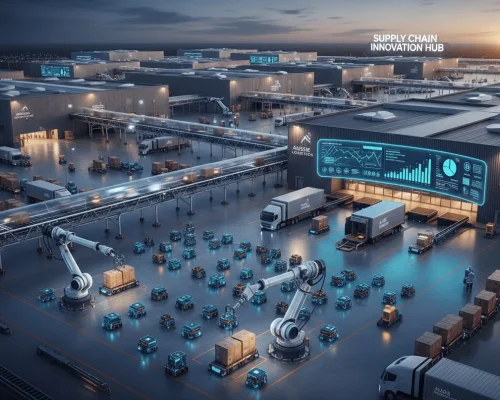
1. The Current State of Supply Chain Management in Australia
Australia’s geography presents unique supply chain challenges:
- Vast distances between major cities and regional areas
- High transport and fuel costs
- Dependence on ports and multi-modal freight
- Growing e-commerce demand
Traditional supply chains were often linear and manual, relying heavily on human labor and paper-based tracking. These methods were prone to delays, errors, and inefficiencies, particularly for businesses operating at a national scale.
Technological adoption is now enabling companies to overcome these barriers, streamline operations, and gain real-time visibility into every step of the supply chain.
2. Key Technologies Transforming Australian Supply Chains
a) Artificial Intelligence (AI)
AI optimizes supply chain operations by:
- Predictive analytics for demand forecasting
- Route optimization for faster deliveries
- Inventory management to reduce overstocking and stockouts
Example: AI algorithms can predict peak demand periods for e-commerce retailers in Sydney or Melbourne, ensuring warehouses are adequately stocked before high-demand periods.
b) Internet of Things (IoT)
IoT devices provide real-time data on shipments, storage conditions, and vehicle performance.
- Temperature sensors for perishable goods
- GPS trackers for fleet monitoring
- Automated alerts for delays or disruptions
This helps Australian businesses maintain quality control, prevent spoilage, and reduce delivery delays.
c) Robotics and Automation
Automation is increasingly integrated into warehouses and distribution centers:
- Robotic arms for picking and packing
- Automated guided vehicles (AGVs) for internal transport
- Conveyor systems for faster sorting
Companies like Amazon Australia and Woolworths are implementing robotics to process orders faster and more accurately.
d) Blockchain for Transparency
Blockchain ensures secure, tamper-proof records for transactions and shipments:
- Enhances trust between suppliers, manufacturers, and distributors
- Tracks provenance of goods
- Reduces fraud and mismanagement
For example, perishable food shipments across Australia can be tracked on a blockchain ledger, guaranteeing transparency from farm to retailer.
e) Cloud-Based Supply Chain Management Systems
Cloud platforms integrate multiple supply chain functions:
- Inventory management
- Order processing
- Supplier communication
- Data analytics
Benefits include real-time collaboration, scalability, and cost-effective deployment across Australia.
f) Big Data & Advanced Analytics
Big data helps businesses analyze vast amounts of supply chain data to:
- Identify inefficiencies
- Forecast demand trends
- Optimize routes and inventory placement
Advanced analytics allows predictive maintenance for trucks and warehouse equipment, reducing downtime.
3. Benefits of Technology in Australian Supply Chains
- Increased Efficiency
Automation and AI streamline processes, reducing manual work and accelerating operations.
- Cost Savings
Optimized routes, predictive inventory management, and automated warehouses lower operational costs.
- Improved Accuracy
Automation and real-time tracking reduce errors in order processing and delivery.
- Enhanced Visibility
IoT sensors, cloud systems, and blockchain provide end-to-end visibility, improving decision-making.
- Scalability
Technology allows supply chains to scale rapidly without significant increases in workforce or infrastructure.
- Sustainability
Optimized logistics and predictive planning reduce fuel consumption and carbon emissions.
4. Challenges of Implementing Technology in Australian Supply Chains
- High initial investment in robotics, AI, and cloud systems
- Workforce adaptation and training for technology-driven operations
- System integration with legacy infrastructure
- Data security concerns in digital supply chain platforms
Despite these challenges, businesses adopting technology report faster ROI, improved customer satisfaction, and stronger competitive positioning.
5. Case Studies in Australia
- Amazon Australia
- Robotics in warehouses
- AI-driven demand forecasting
- Faster order processing for e-commerce
- Woolworths Distribution Centers
- Automated picking and packing
- Real-time inventory analytics
- Efficient nationwide distribution
- Toll Group
- Uses IoT and cloud-based supply chain platforms
- Provides predictive logistics solutions across Australia
These examples show how technology transforms supply chains by improving efficiency, accuracy, and responsiveness.
6. The Future of Technology in Australian Supply Chains
- Fully autonomous warehouses with minimal human intervention
- AI-powered predictive logistics for proactive supply chain decisions
- Blockchain adoption for complete transparency in imports and exports
- Sustainable logistics technologies to reduce carbon footprint
- Integrated multi-modal transport solutions combining road, rail, air, and sea
The Australian logistics industry is moving toward a smarter, data-driven, and highly automated supply chain ecosystem.
Conclusion
Technology is no longer optional in supply chain management — it is essential for businesses aiming to reduce costs, increase speed, and improve customer satisfaction in Australia.
By embracing AI, IoT, automation, blockchain, and cloud-based SCM, companies can:
- Optimize operations
- Predict demand
- Improve visibility
- Ensure faster and more reliable delivery
The future of Australian supply chains lies in smart, connected, and automated logistics networks.
Frequently Asked Questions
Q1: How is technology transforming supply chain management in Australia?
Through AI, IoT, robotics, blockchain, and cloud systems, improving efficiency, accuracy, and transparency.
Q2: What are the benefits of a digital supply chain?
Reduced costs, faster delivery, real-time visibility, better decision-making, and scalability.
Q3: What technologies are used in modern Australian supply chains?
AI, IoT sensors, robotics, automation, blockchain, cloud SCM platforms, and data analytics.
Q4: Are automated supply chains expensive in Australia?
Yes, initial investment is high, but long-term efficiency and ROI justify the cost.
Q5: Can technology help reduce environmental impact?
Yes, predictive planning and optimized routes reduce fuel consumption and carbon emissions.